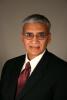
Guestbook Entry for Ramakrishna Ganti, United States
Name
Ramakrishna Ganti
Country
United States
State
New Jersey

On November 20, 2014, the President announced a series of executive actions to crack down on illegal immigration at the border, prioritize deporting felons not families, and require certain undocumented immigrants to pass a criminal background check and pay taxes in order to temporarily stay in the U.S. without fear of deportation.
For updates, see my blog page on Obama's Immigration Action.
Takeaway points for legal immigration from President Obama’s executive action:
1. USCIS is “about to” publish the final rule on H-4 work authorization. That will make it possible for certain spouses of H-1 holders to get work authorization.
2. Improving employment-based green card backlogs by:
a. Making visa issuance more efficient so no immigrant visas are wasted;
b. Providing for better AC21 rules and other ways to keep immigrant visas intact after a change of jobs. USCIS will clarify what constitutes “same or similar” job so that AC21 will not stop workers from getting promotions or even changing to related jobs within their field. USCIS must clear the path to career progression for green card applicants.
3. Expandingfurther the OPT time for STEM students, but creating tighter control on which universities/schools/degrees are eligible and ensure local workers are protected (Implement some sort of a “mini PERM?”).
4. Creating opportunities for foreign “inventors, researchers and founders of start-up” companies to come to the USA through an existing program called “National Interest Waiver.” Unfortunately for India, this is an EB-2 category program requiring several years of wait. But the following parole program will help:
a. Creating a parole (which is usually a temporary, but very quick measure and could eventually lead to a green card) program so that on a case-by-case bases, “inventors, researchers and founders of start-up” companies can be brought quickly into the USA where:
i.They have raised financing in the USA; OR
ii.Otherwise hold the promise of innovation and job creation through development of new technologies OR cutting edge research
5. Creating guidelines for exceptionally qualified or advanced degreed individuals to come to the USA through an existing program called “National Interest Waiver.” As noted, unfortunately for India, this is an EB-2 category program requiring several years of wait. But the parole option above could be helpful.
6. Providing clear guidance on L-1B program as to who can qualify.
We won a case for National Interest Waiver a Microbiologist holding a Ph.D., 12 publications and over ten years research experience. We were able to provide evidence of a strong national interest through numerous letters of recommendation from leading scientists. This applicant had an international reputation in his field.
We won a case for Alien of Extraordinary Ability a Mathematician holding a Doctorate of Mathematical Science, numerous “invited” publications and presentations as well as several prestigious international awards. We were able to provide evidence of extraordinary ability through letters of recommendation from leading mathematicians around the world. This applicant had strong support from the U.S. government and industry.
We won a case for Alien of Extraordinary Ability in environmental sciences with 9 publications, numerous “invited” committee memberships, a judge of the work of many other leading scientists and considered one of the leading experts in his field. We were able to provide evidence to show that his work was innovative and pioneering.
We won a case for Outstanding Researcher a Cellular and Molecular Biologist with 8 prestigious awards, professional society memberships and multiple letters of recommendation from leading scientists. We were able to provide evidence to show extensive contributions to the field of cancer research.
This applicant was a data recovery specialist under contract with the U.S. government providing critical skills to a high-level project. It was noted by referees that his knowledge and background were rare and greatly needed in the interest of our national defense. We provided documentation of his academic achievements as well as additional specialized training.
We won this case for an applicant with expertise in computer science utilizing his skills in the development of e-Government. His work was considered pioneering worldwide. We provided evidence that he was frequently called upon to present his work. He also served on numerous program committees.
We won this case for an applicant with five years research experience. The applicant was able to secure a very strong letter from the National Science Foundation director which detailed the innovative and pioneering work of the applicant. It was noted that his skills were critical for an initiative developed by the Foundation. We also offered evidence of his strong Ph.D. work as well as his publication record.
State Department has indicated that as of 11 April 2012 there are no more immigrant visas (green cards) available for China and India-born EB2 applicants. The numbers will be reset on 1 October 2012, the start of the new fiscal year. In the meantime, USCIS will continue to accept I-485 filings until the end of June based upon the Visa Bulletin that will be published in May. No action will be taken on these applications until October, but its is expected that EAD/AP's will be issued.
There was an interesting question in today's community conference call we host every other Thursday. The link to the question is here: http://forums.immigration.com/showth...onference-Call
PERM filing issue
Many web sites are erroneously reporting that India EB-2 is current for February 2011. Please note, that is FALSE. India EB-2 is backed up to May 2006.
This week, we have received an Oustanding Researcher approval in one day. I hope and wish we could see more of this lacrity in USCIS adjudications. Details of the case are here:
http://www.immigration.com/sample-ca...proved-one-day
We won an Alien of Extraordinary Ability case for the applicant having advanced degrees from the prestigious Indian Institute of Technology, one of the most premier institutes in India. His research work was so highly regarded that he was awarded a two-year post-doctoral fellow at the Institute. This is a very high honor in that only “a select few” are considered for this position. The applicant had numerous books on civil engineering published and utilized by prestigious teaching institutes.
We first obtained an O1 for this applicant by identifying his talents and expertise to be a cut-above his colleagues with similar educational and work experience. This applicant received a prestigious international award which set him apart from other research scientists in his field. He was noted for ground-breaking work in drug addiction research. We obtained recommendation letters from world experts and they noted that this applicant was one of the few researchers in the field who had achieved the highest level of success and had become